
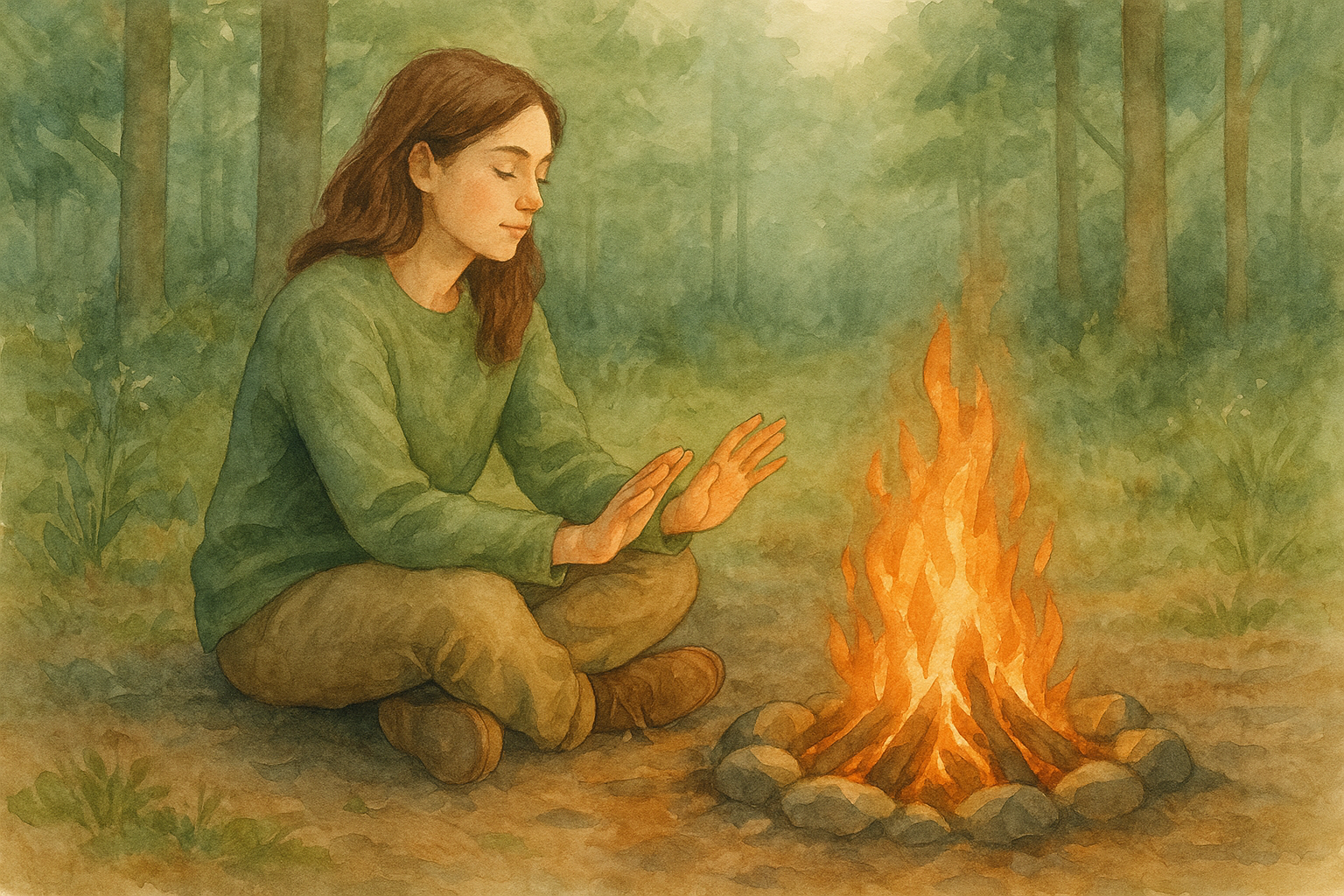
A Nonviolent Approach to Managing Team Conflict
Unless you lead a team of robots, emotions will show up at work.
And if you are lucky enough to have a team of people who are deeply committed to their work, the emotions will sometimes run hot. Frustration, anger, resentment, stress—these aren’t necessarily signs that something’s gone wrong. They’re often signs that people care.
But unregulated “hot” emotions can start little fires inside your team. Left unchecked, they scorch relationships, burn through trust, and reduce good intentions to ash. Almost no one escapes without injury.
The good news? Just like literal fire safety, emotional fire safety can be learned and practiced. With the right tools, your team can stay warm, even passionate, without going up in flames.
Equip Your Team with Fire-Resistant Clothing
To work in heat, you need the right gear. Emotional resilience is the fire-resistant clothing that helps people stay close to the heat of meaningful work and passionate conversations without going up in flames.
Every day, we step into situations that carry emotional risk—tight deadlines, conflicting priorities, difficult feedback, unspoken tensions. The more exposed we are without protection, the more likely we are to react reflexively when things get hot.
As a leader, your role isn’t to eliminate every source of heat. It’s to make sure people are equipped to engage with intensity safely. That means helping your team recognize when their gear is wearing thin and supporting them in developing habits that reinforce their inner protection.
Help people assess their exposure.
What emotional loads are theirs to carry? What can be set down? Knowing the difference helps avoid carrying unnecessary weight that makes heat harder to manage.
Clarify what can be controlled.
Leaders who help their teams distinguish between what they can act on and what is outside their scope of influence, can make sure efforts are directed to the impactful efforts, which reduces burnout and reactionary behavior.
Encourage regular maintenance.
Like protective clothing, emotional regulation practices need consistent care. Movement, breathwork, and connection aren’t indulgent extras—they’re basic safety measures.
Fire-resistant teams aren’t superhuman. They’re prepared. And preparation allows people to show up fully—even when the work gets hot.
Practice Good Fire Hygiene
In a forest, fire hygiene means clearing underbrush, safely extinguishing campfires, and watching for wind. In a team, it’s about addressing friction early, normalizing emotion, and keeping resentment from accumulating like dry brush.
One of the most dangerous myths in team dynamics is the belief that “being nice” is the same as being safe. But in many organizations, niceness masks avoidance. Tensions go unspoken. Emotions get swallowed. Problems linger until one careless comment lights the match.
Address tensions while they’re small.
Waiting for things to boil over makes them harder to resolve and more likely to cause damage. Build a habit of surfacing concerns early and often.
Make space for safe emotional expression.
Suppressing emotion doesn’t make it go away—it just turns it inward, or delays its release. Teams that can talk about their emotional responses tend to trust each other more deeply.
Understand each other’s patterns.
What energizes one person might stress another. Knowing how your teammates respond under pressure helps prevent accidental flare-ups.
The goal isn’t to remove all conflict. It’s to create a space where heat has a place to go—where it can warm, cook, catalyze—without destroying what you’ve built.
Keep Fire Extinguishers Handy
Even in the most fire-conscious teams, flare-ups happen. The more your team cares, the more likely it is that someone’s emotional load will catch.
That’s not a leadership failure. It’s a sign of investment. But intensity without preparation is dangerous—and if your team doesn’t have quick access to emotional fire extinguishers, even a small spark can do real damage.
So what does a fire extinguisher look like in a human system?
It’s not one-size-fits-all. But most people need fast, simple tools they can reach for when they feel themselves heating up.
Box breathing is one of the quickest ways to reduce emotional intensity in the moment. Inhale for four seconds, hold for four, exhale for four, hold for four. This technique slows the nervous system and gives the brain a signal that it’s safe to downshift. It doesn’t solve the conflict—but it keeps you from adding fuel to it.
Grounding exercises work by pulling attention out of the racing mind and back into the body. Ask: What can I see? What can I hear? What can I feel beneath me? These questions help interrupt the firestorm of reactivity, reconnecting someone to the present instead of the past or imagined future.
Physical movement discharges built-up adrenaline. A brisk walk, a few jumping jacks, even tensing and releasing the muscles in your legs can “bleed off” enough heat to make room for rational thought again. Think of it as releasing the pressure valve before the fire spreads.
Of course, not everyone responds to the same tools. That’s why part of your role as a leader is to help your team identify their own “go-to extinguisher”—before they’re engulfed in flames. For some, it’s five minutes alone. For others, it’s a text to a trusted friend, a run up the stairs, or stepping into a quiet room to breathe.
You don’t have to solve someone’s feelings for them. You just have to help create an environment where it’s normal to say, “I need to cool off,” and to know how.
Normalize it. Plan for it. Practice it. Because if there’s one thing more dangerous than fire, it’s pretending it could never happen here.
Know When It’s Time for a Firewall
Most emotional fires are accidental. But some are not.
Sometimes, a team member’s volatility isn’t just stress—it’s a strategy. An unconscious defense mechanism. A way to resist change, preserve power, or avoid accountability.
And if someone refuses to learn fire safety, you may have to build a firewall.
Set clear boundaries and follow through.
It’s not enough to have expectations—you have to communicate them clearly and apply them consistently. Accountability protects everyone, not just the person in question.
Limit the spread of their volatility.
Sometimes that means changing roles or reducing influence. Other times it means separating them from the team entirely. A firewall’s job is containment.
Don’t try to manage their fire for them.
It might seem compassionate to do the emotional labor yourself—smoothing things over, anticipating their outbursts, walking on eggshells. But it’s unsustainable, unfair, and ultimately damaging to the team.
Eventually, the fire will do irreversible damage. When it does, it will feel like betrayal—because no one ever said, “Your behavior compromises the team’s safety.”
Being a nonviolent leader means recognizing that kindness isn’t the same as self-sacrifice. When someone endangers the health of the team, your job shifts: from supporting them through the fire, to protecting the rest of the team from the flames.
Fire Safety Is Team Safety
Conflict isn’t the enemy. Emotion isn’t the enemy.
The real danger is unmanaged volatility—when heat builds and no one knows how to manage it safely.
With a little fire wisdom, your team can do more than just avoid disaster.
You can build a workplace that’s strong, warm, and resilient—a place where heat fuels connection and purpose instead of destruction.
That’s what nonviolent leadership is for:
Not to eliminate conflict, but to help us learn how to stand near the flame without getting burned.
Try This: Fire Safety Experiments for Your Team
If you want to build a more fire-resilient team, you don’t need a complete overhaul—just a few intentional shifts. Here are some experiments you can try this week:
Ask your team to define their “go-to extinguisher.”
During a check-in or 1:1, ask: What helps you cool down when things get tense? Normalize using those tools before things boil over.
Hold a conversation about “heat tolerance.”
Every team has a different comfort level with intensity. Talk about yours. What kind of emotional expression feels safe? What feels overwhelming?
Choose one situation where you’ll let small sparks show.
Instead of swallowing a minor irritation or walking away from discomfort, name it gently. Notice what happens when you treat it as routine maintenance instead of a crisis.
Make fire safety part of your norms.
Include language about conflict, cooling off, and emotional support in your team charter or agreements. If it’s built into your structure, it’s easier to practice in the moment.
Model fire-resistance yourself.
When you feel yourself getting hot, say it out loud. Then take a breath, reset, and come back. Showing your gear in action teaches your team that it’s safe to do the same.
Ready to lead without burning out?
Whether you’re managing a team that regularly ignites itself—or just want to prevent future fires—I help leaders navigate conflict with clarity, compassion, and skill.
If this post resonated, you don’t have to figure it all out alone.
Let’s talk about what fire safety might look like for you and your team.